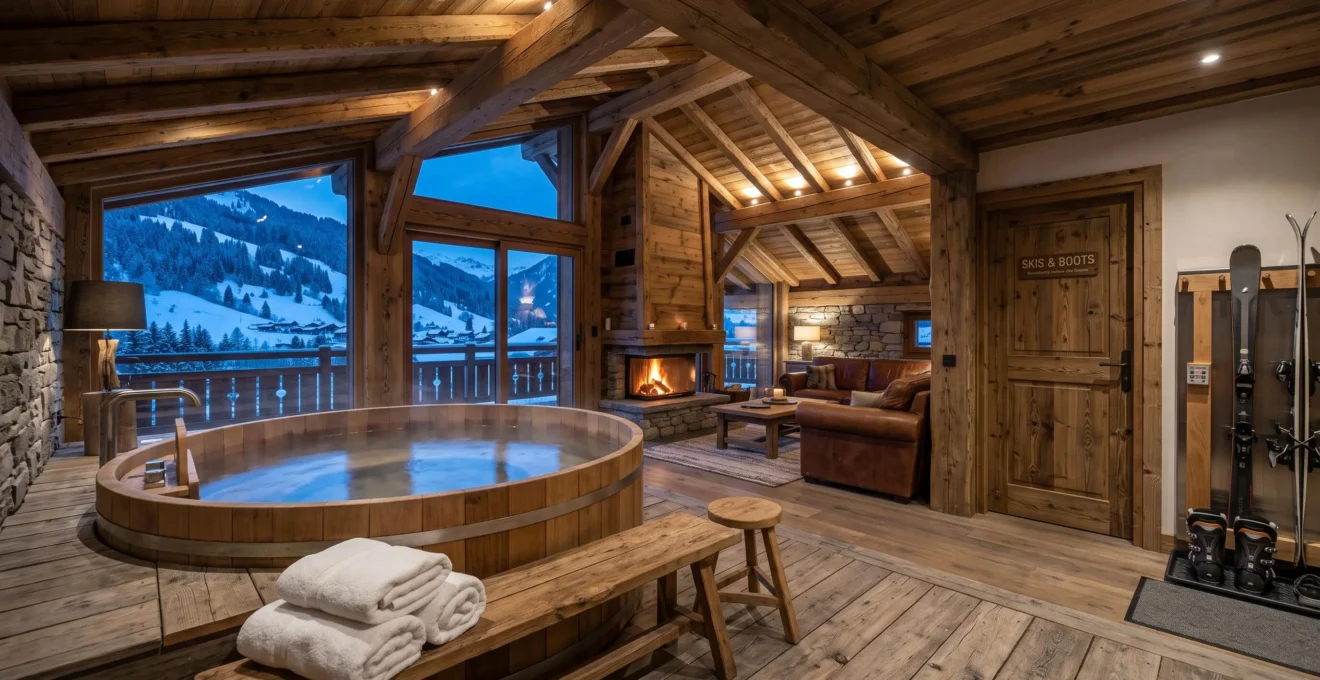
Choosing a high-end loft in Courchevel is rarely a question of style alone. For a family or a group of friends planning a week in the Tarentaise, the real dividing line between a merely expensive rental and a genuinely premium one runs through three concrete features: a private spa, a secure garage and a dedicated ski room. Each one addresses a specific friction of a ski week, from muscle recovery after the slopes to daily logistics between the car, the equipment and the piste. The pages that follow set out what these features should actually deliver, how to verify them before paying a premium, and how to secure the right property in a resort where availability tightens quickly as winter approaches.
What defines a high-end loft in Courchevel?
A high-end loft in Courchevel is defined by a combination of generous open-plan volume, premium finishes and a set of signature facilities that reduce the practical friction of a ski week. In the local market, the label typically applies to properties with an open living area suited to a family or a group, high-quality materials such as solid timber, natural stone and bespoke joinery, and a sleeping capacity that comfortably accommodates six to ten guests. Layout matters as much as surface area: a loft that separates the living zone from the wellness area and from the technical spaces (garage, ski room) offers a different daily experience from a large flat with equivalent square metres.
Direct answer: A loft is classified as high-end in Courchevel when it combines premium volumes and finishes with three verifiable features: a private spa reserved for guests, a private garage, and a dedicated ski room, ideally close to the slopes.
The three non-negotiables of the segment are consistent across the resort. A private spa means a wellness area used exclusively by the occupants of the property, not a shared facility in the building. A garage means a private, covered parking space with confirmed vehicle access, not merely an outdoor bay. A ski room means a dedicated storage area, ideally heated, with boot dryers and individual lockers. When any of these three is missing, the property may still be comfortable, but it no longer occupies the same tier of the local offer. According to a directory of local rentals communicated by Courchevel real estate agency, this combination is what most consistently distinguishes premium chalets and lofts from the wider high-end pool.
Where does the loft fit between chalet and apartment?
A loft in Courchevel occupies a middle ground: it retains the open volumes and design signature of a chalet while remaining part of a residence, which often simplifies services and security. Compared with a standalone chalet, a loft is generally more compact and slightly less private, but it can offer a comparable level of finish and equipment. Compared with a standard apartment, it stands out through ceiling height, layout, and the presence of the three signature features. The choice usually comes down to the size of the group, the desired level of autonomy, and the priority given to distinct living zones.
Why does proximity to the slopes matter so much?
Courchevel gives direct access to Les 3 Vallées, and the position of the property within the resort has a measurable effect on the daily rhythm of a ski week. A ski-in ski-out loft removes the need for shuttles or short drives at the start and end of each day, which becomes decisive with children or a large group. According to the Courchevel tourist office, the resort connects to 600 km of linked pistes, with a large share of the ski area located above 1800 metres. This altitude profile, combined with the density of lifts, explains why properties with genuine slope-side access command a premium: they convert a locational advantage into time actually spent on the mountain.
Why a private spa, garage, and ski room make the difference
The three signature features of a high-end loft are not luxury add-ons; they are the concrete tools that shape the experience of the week. Each one addresses a specific pain point that most guests only notice when it is missing. Read together, they form the practical backbone of a rental that lives up to its price.
What does a private spa really change after a day on the slopes?
A private spa turns post-ski recovery into a routine rather than an outing. After several hours on cold pistes, guests can move directly from the ski room to a warm bath, sauna or hammam without booking a slot, sharing space with strangers, or leaving the property. The wellbeing benefit is tangible: warmth accelerates muscle recovery, and the absence of scheduling constraints allows each member of the group to use the facility when it suits them. The word “private” is decisive here: a spa shared with other residents of the building, even in a premium address, does not deliver the same experience and should not be priced at the same level.
Why is a secure garage more than a convenience?
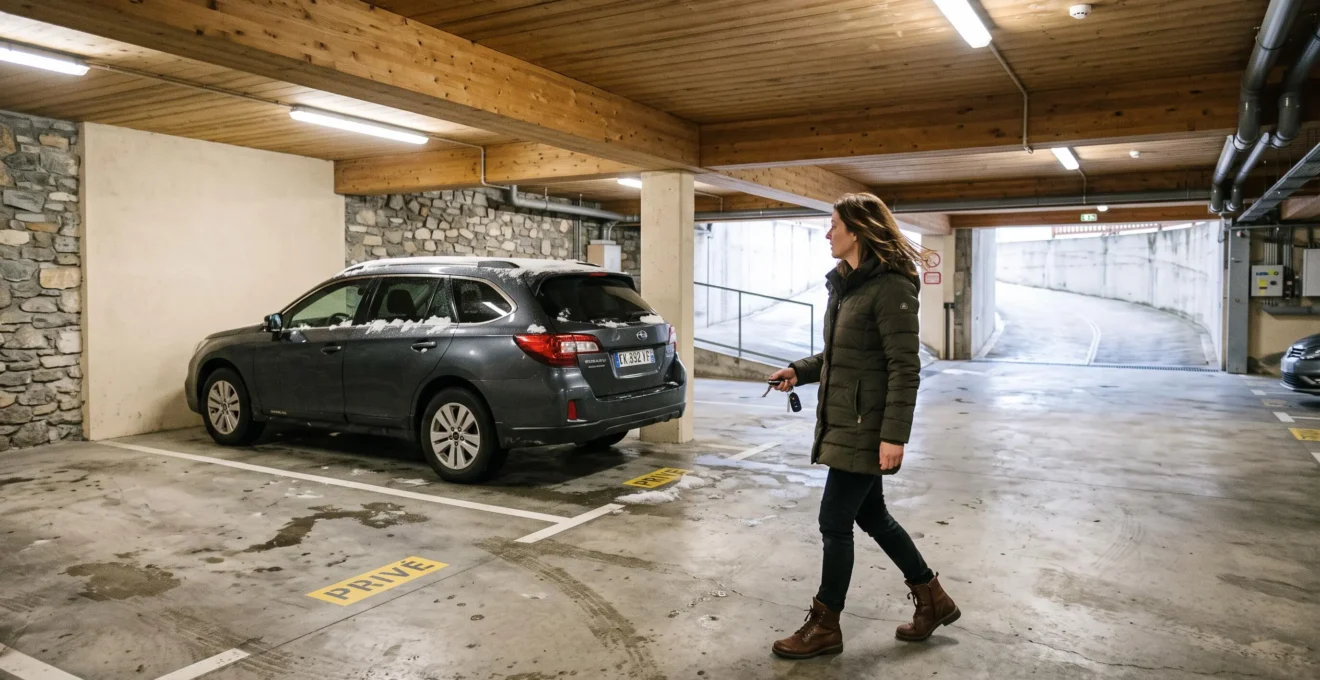
Parking in Courchevel is scarce, expensive and often exposed to winter conditions. A private garage removes three recurring frictions: searching for a public space on arrival, clearing snow from the vehicle each morning, and worrying about equipment left inside. For guests arriving with ski boxes, snow chains or a large family car, the confirmation of a dedicated bay, its dimensions, and its access ramp is a practical matter, not a detail. It also protects the vehicle from freezing temperatures, which preserves battery life and mechanical reliability over the week.
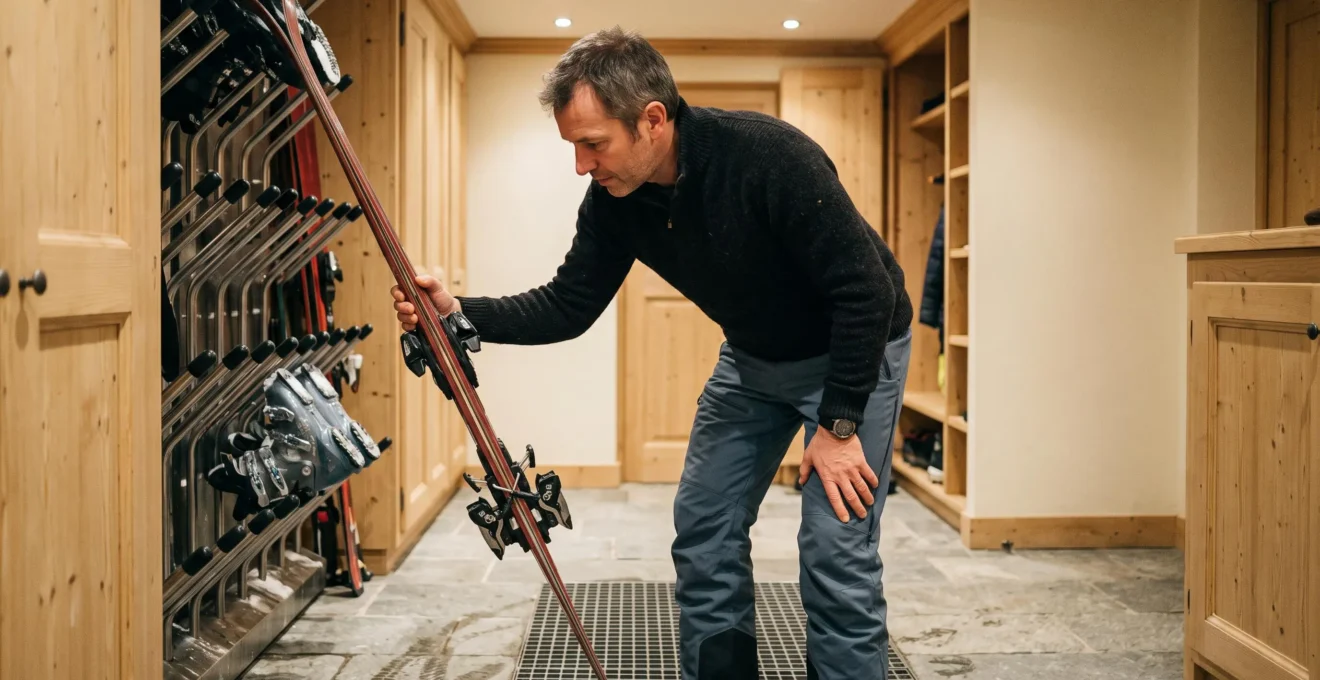
What should a genuine ski room offer?
A dedicated ski room turns the daily transition between the loft and the mountain into a smooth operation. In practice, guests place wet gear on heated racks in the evening and retrieve dry boots and gloves the next morning, without cluttering the living area. Individual lockers keep each person’s equipment separate, which matters for larger groups. A properly equipped ski room typically includes heated boot dryers, ventilated racks for skis and helmets, a drainage floor, and enough space to move without stepping over equipment. When these elements are all present, morning departures and evening returns take minutes rather than a series of small inconveniences.
Considered together, the private spa, the garage and the ski room reduce the invisible tax of a ski week: waiting, moving, drying, storing, parking. This is why an honest premium listing should convert each of these features into a concrete benefit rather than a marketing bullet point.
How to evaluate a luxury rental listing before booking?
Evaluating a luxury listing is essentially a work of translation: turning each promise in the description into a verifiable point. The photographs, the wording of the amenities and the answers you receive by email together form the evidence base on which a booking should rest. A structured approach avoids both the trap of taking premium claims at face value and the opposite trap of hesitating so long that the property is gone.
Quick verification framework before booking
- Cross-check every advertised feature (spa, garage, ski room) with dedicated photos.
- Request written confirmation of private, exclusive use of the spa throughout the stay.
- Ask for garage dimensions, height clearance and access procedure.
- Confirm ski room equipment: heating, boot dryers, individual lockers.
- Have all key features reflected in the booking contract or rental agreement.
Which questions should you ask the agency?
A short list of precise questions usually reveals the true level of a property. Ask whether the spa is strictly reserved for the loft’s occupants, whether it is available throughout the stay without prior booking, and how maintenance is handled if a technical issue arises. For the garage, request confirmed dimensions, height clearance and the exact access procedure on arrival. For the ski room, ask whether it is heated, whether boot dryers are provided, and whether each guest has an individual locker. Written answers, ideally attached to the booking confirmation, transform a marketing description into a contractual commitment.
What are the red flags in a premium listing?
Several signals should prompt caution. Vague wording such as “spa available” without further detail often masks a shared facility or limited access. The absence of dedicated photos for the spa, the garage or the ski room typically indicates that these areas are less impressive than the living space. Ambiguous availability terms (“subject to conditions”, “on request”) for features described as included belong to the same category. Compare the following two formulations: “spa available” versus “private spa, exclusive use of the loft’s guests, heated and accessible throughout the stay without prior booking”. The second is verifiable; the first is not.
Beware of overvalued listings: a premium price tag does not automatically guarantee premium features. Any feature that cannot be verified in writing, in photographs or in the contract should be treated as uncertain, whatever the tone of the advertisement.
Booking with confidence: availability, pricing, and local expertise
Securing a high-end loft in Courchevel is largely a question of timing and of the partner chosen for the booking. Peak weeks are absorbed by an international clientele that reserves months in advance, and the pool of properties combining a private spa, a garage and a ski room is naturally limited. Understanding when to act, and with whom, protects the investment made in the stay.
When does peak demand hit Courchevel?
The busiest windows correspond to the French school holidays (February zones), the Christmas and New Year period, and the weeks bracketing key alpine events. During those periods, the Observatoire National des Stations de Montagne reports strong occupancy across mountain accommodation: according to the ANMSM winter 2024 review, average occupancy reached 83 % across mountain accommodation during the winter school holidays, with a further increase in the northern Alps. In the specific segment of premium lofts and chalets, availability tightens far earlier than in the wider market, which explains why serious enquiries for peak weeks often start six to nine months in advance.
Why does a locally specialised agency matter?
A locally rooted agency brings a form of value that no listing platform can replicate: first-hand knowledge of each property, of its owners, of its recent condition, and of the practical details that photographs cannot always convey. When an agency has personally visited a loft, it can confirm whether the spa is indeed reserved for the guests, whether the garage genuinely accommodates a large vehicle, and whether the ski room has been recently maintained. This is particularly valuable in Courchevel, where the concentration of premium properties is significant: INSEE data on Courchevel accommodation shows that the commune counts 19 five-star hotels alongside its rental market, illustrating a local ecosystem where the standard of expectation is high and where verification therefore matters proportionally.
Rates in Courchevel vary substantially between peak weeks (Christmas, New Year, February holidays) and shoulder periods (early December, mid-January, late March), and precise pricing should always be confirmed with the agency at the moment of booking. For guests who wish to combine confidence with flexibility, working with a specialist that has verified the properties on offer is the most reliable route to matching expectations with reality.
FAQ: common questions about luxury lofts in Courchevel
The following answers address the questions most often raised at the final stage of comparison, when the property shortlist has narrowed but a few practical points still stand between deliberation and booking.
How far in advance should a luxury loft in Courchevel be booked for peak season?
For the French winter school holidays, the Christmas and New Year period, and the busiest February weeks, serious enquiries generally start six to nine months in advance, and the most sought-after properties are often confirmed by summer. For shoulder-season weeks, a lead time of two to three months is usually sufficient, though this remains dependent on the specific property and should be confirmed with the agency.
Do rates differ significantly between peak and off-peak weeks?
Yes. In Courchevel, weekly rates for high-end lofts show a substantial gap between peak weeks (festive period, February holidays) and shoulder weeks (early December, mid-January, late March). Because pricing structures vary by property and by season, precise figures should always be requested from the agency for the specific week under consideration rather than estimated from generic references.
How can the key features (spa, garage, ski room) be verified before arrival?
By requesting dedicated photographs of each area, asking written questions about exclusivity of use, dimensions and equipment, and ensuring that the agency’s answers are reflected in the booking contract. A property that can substantiate every advertised feature in writing offers a level of confidence that a description alone cannot provide.
How many people can a high-end loft in Courchevel typically accommodate?
Capacity varies by property, but high-end lofts in Courchevel commonly accommodate between six and ten guests, with layouts designed for families or groups of friends. The exact number of bedrooms, bathrooms and sleeping configurations should be confirmed with the agency, as should any additional bedding solutions offered for children.
Approaching the reservation as an investment in a quality stay changes the reading of every detail: each verified feature is a source of comfort during the week, each unverified promise is a risk carried by the guest. For readers who wish to take that reasoning further and consider how the same principles of verification apply to property choices more broadly, this reading on successful rental investment offers a complementary perspective.
A high-end loft in Courchevel is ultimately judged on the coherence between what is promised and what is lived. When the private spa, the garage and the ski room are genuinely delivered, and confirmed in writing by a locally specialised agency, the week on the slopes is freed of the small frictions that erode a stay. The next step is straightforward: build a shortlist, ask the precise questions listed above, and secure the booking as soon as availability and answers align.